There is a story that has traveled through Inuit myth, retold in many voices, and it lingers like salt on the tongue and shadow in the net. It is the story of Skeleton Woman.
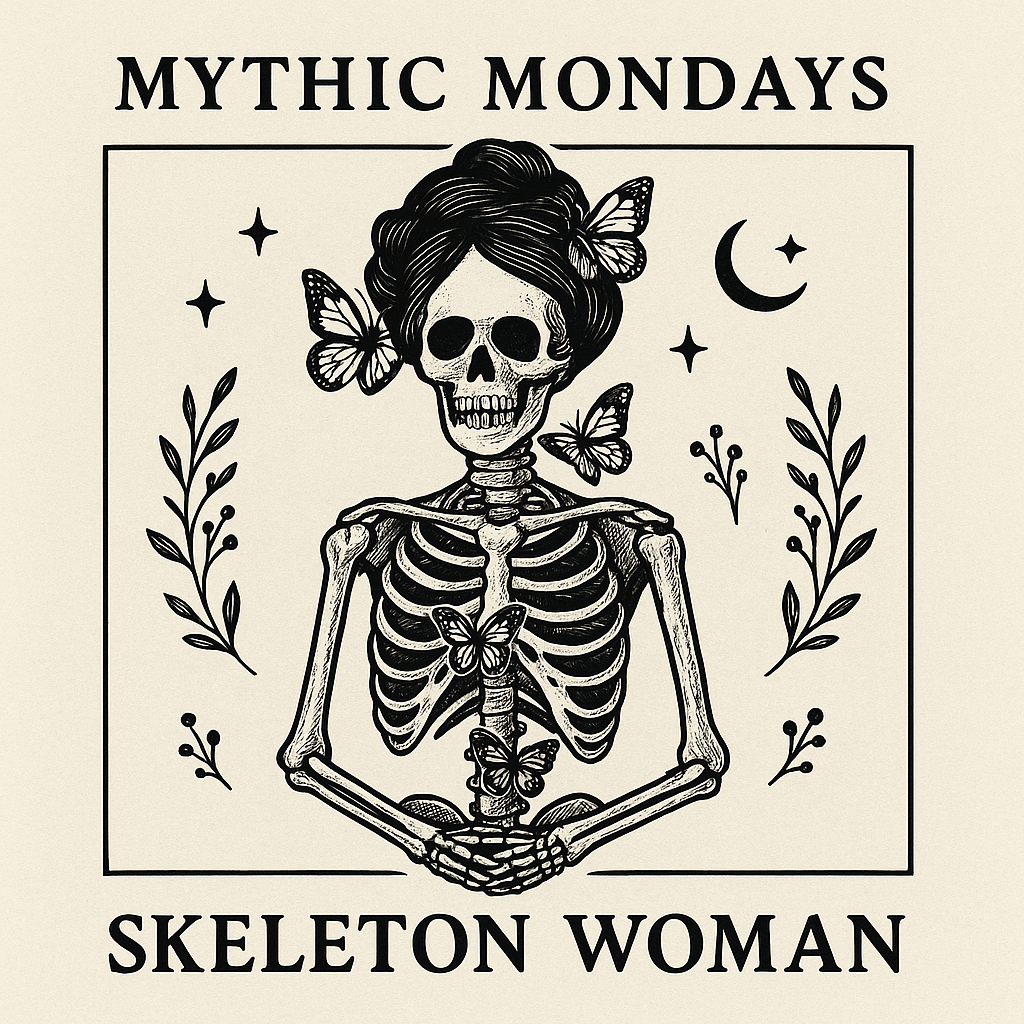
🕯️ The Story
She was once a young woman, though no one quite remembers why or how she was cast out. Some say her father threw her into the sea, others that misfortune swept her there. What matters is that she sank beneath the waves, and the fish stripped her down to bone. There she lay for a long, long time, forgotten on the ocean floor.
One day a fisherman cast his net and caught something heavy. He pulled and pulled, and what rose was not a shining fish but a skeleton, tangled in cords, bones rattling in the surf. Horrified, he fled, dragging her all the way back to his hut as she clung in knots of seaweed and net.
That night, when he finally turned to face her, something shifted. Instead of fear, he felt a strange compassion. With trembling hands, he untangled her bones, laid them gently in order, and covered her with furs. As he slept, a tear fell from his eye. Skeleton Woman drank that tear, and with it, she came back to life. Flesh returned to bone, breath to lungs, heartbeat to chest. She became whole again, lying beside the fisherman who dared to tend what terrified him.
🌑 What This Archetype Teaches
Skeleton Woman is not simply a ghost story. She is an initiator. She teaches that intimacy with life requires intimacy with death. That true love, true creativity, true devotion come only when we stop running from what is stripped bare.
We all have our “bones” — the losses, endings, exiles, and griefs we’d rather not face. The parts of us left behind at the bottom of the sea. But when we dare to turn toward them with compassion, something unexpected happens. The bones don’t disappear — they transform.
🜍 In the Shadow Lands
Skeleton Woman is the embodiment of the shadow anima — the feminine figure who rises from the unconscious, terrifying at first, tangled in nets, chasing what flees from her. But when met with compassion instead of rejection, she transforms — revealing Eros, love, and vitality.
Jung would say she is a psychoid figure of death and rebirth, the archetypal current that ensures no individuation happens without facing mortality.
She also reveals the tension between fear and intimacy. The fisherman cannot truly live until he sits beside death; likewise, we cannot know intimacy until we honor the inevitability of loss. Skeleton Woman is thus a psychopomp in disguise — a guide into integration, wholeness, and love that has depth.
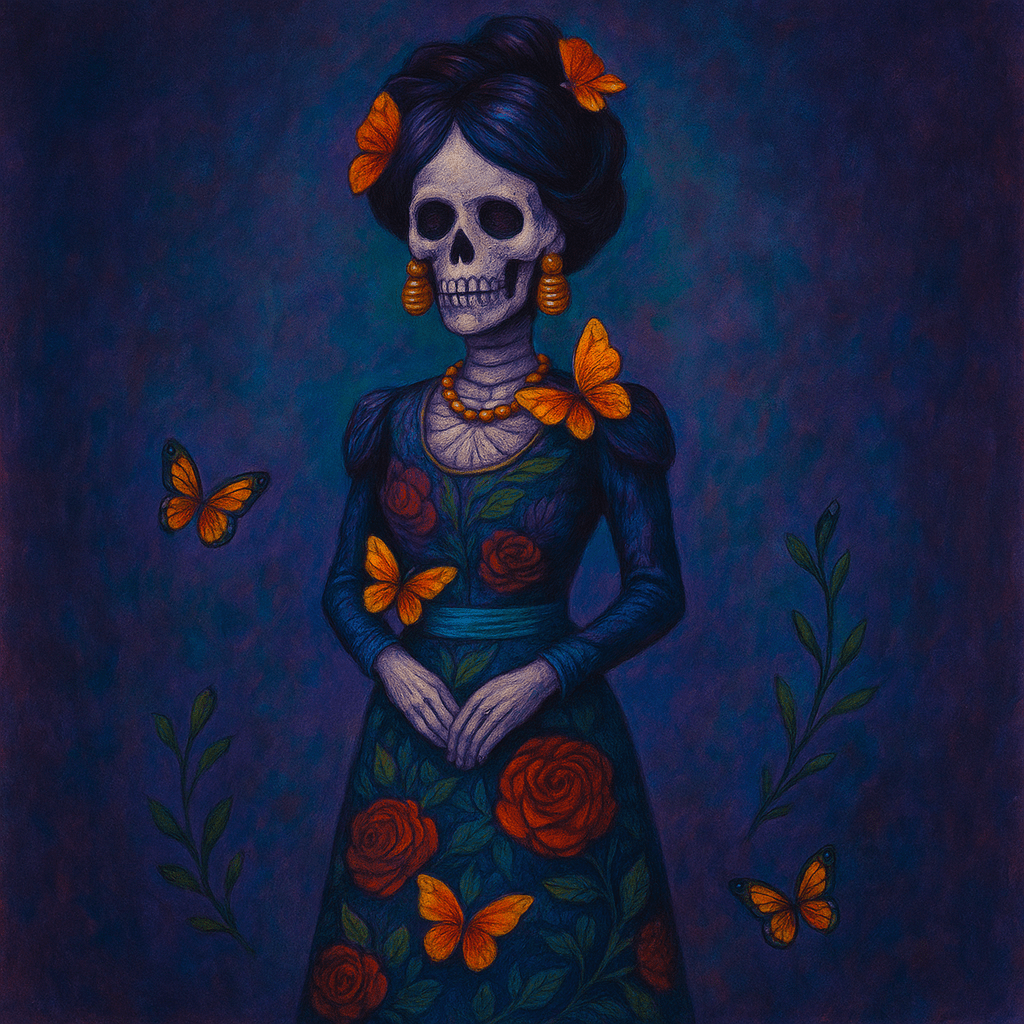
✍️For deeper exploration and contemplation
- What bones in your life are asking not to be fled from, but to be tended with reverence?
- Where have you tried to outrun loss, only to find it clinging to your net?
- What does compassion for your own “skeleton woman” look like?
🔮 Ritual Nudge
Find a small object (a stone, a shell, a bone, a piece of driftwood) to represent the “bone” of your story. Place it on your altar or windowsill. Each day for a week, sit with it in silence for a few minutes. Whisper to it: “I do not flee you. I see you. I tend you.” Notice what shifts as you bring the light of compassion to what was once feared.
💌 An Invitation
Skeleton Woman asks: Will you run, or will you stay? Will you drag the bones behind you in fear, or will you sit with them long enough for them to grow wings?
Her story is not about what you lose, but about what you recover when you dare to honor endings as part of the great cycle of love and life.
🌒 Closing Thoughts
This story has lived in many traditions because it speaks to something universal: that life and death are not enemies, but dance partners. To love fully is to accept loss. To create fully is to honor destruction. To live fully is to sit beside our own bones, waiting for them to breathe again.
May you tend your bones with reverence.
May what has died in you become the wind that carries you forward.
Until next time,
The Inspired Imaginative | The Devoted Mystic
© 2025 The Devoted Mystic.
All rights reserved. This content is the original work of the author and may not be copied or reproduced without explicit permission.

 thedevotedmystic.com
Leave a comment